I completed a Certificate IV in Cyber Security at RMIT University in 2025 and am working towards a career as a Security Operations Analyst. My passion for computing and cyber defence drives me to keep building my knowledge and skills in this fast-moving field.
This page documents my Cyber Security journey, covering my studies, certifications and the hands-on projects I have completed along the way.
My strengths are understanding client needs, resolving conflict calmly and building trust, all of which matter when reducing cyber risk. I am committed to developing the technical skills to find vulnerabilities, apply secure practices and meet modern security standards.
Cyber Security interests
Threat analysis and mitigation: understanding and reducing risks to critical systems and sensitive data.
Incident response: identifying, containing and resolving security breaches efficiently.
Ethical hacking: using penetration testing to find weaknesses before malicious actors do.
Compliance and governance: following security policies and frameworks such as ISO 27001 and NIST, and helping build a culture of accountability.
Continuous improvement: sharpening my skills on Hack The Box and TryHackMe through hands-on labs, capture-the-flag (CTF) challenges and attack simulations, with a focus on network security, exploitation techniques and system hardening.
Projects
All attack work was carried out in isolated lab environments.
Phishing and credential harvesting
RMIT Kali Linux, Windows, Social-Engineer Toolkit
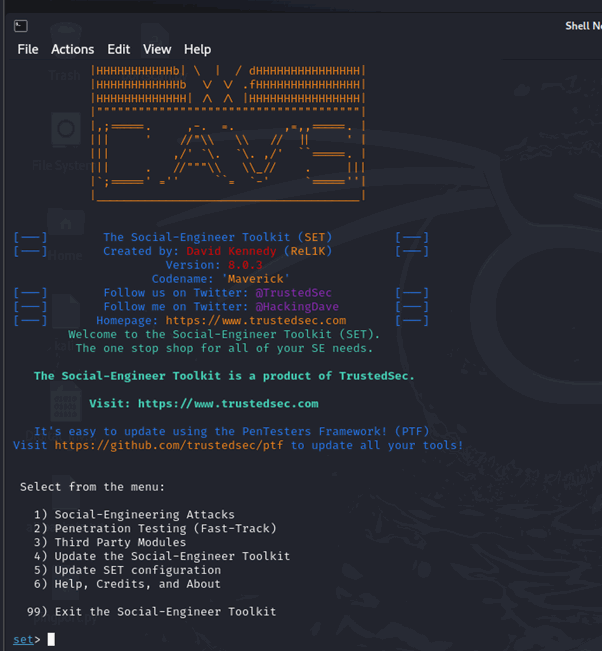
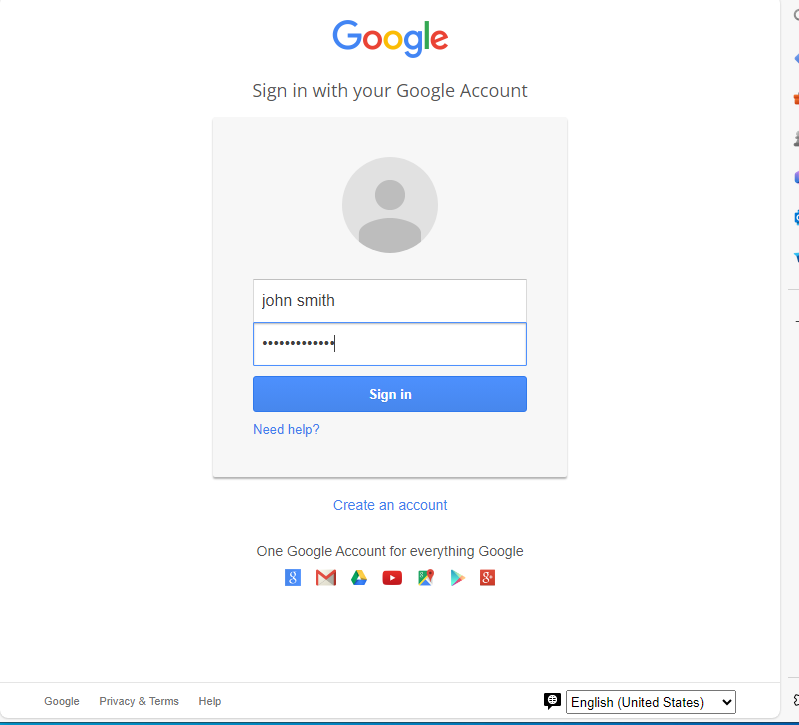
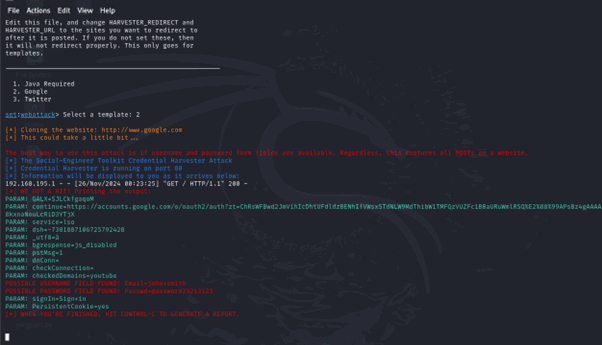
Built a phishing simulation with the Social-Engineer Toolkit (SET) in Kali Linux, using a cloned login page (a fake Gmail sign-in) to capture credentials.
What was the challenge: Phishing is one of the most common ways attackers steal credentials. I wanted to understand how convincing a fake sign-in page can be and what an attacker can actually capture, so I could explain the risk and how to defend against it.
What steps I took:
Launched and configured SET.
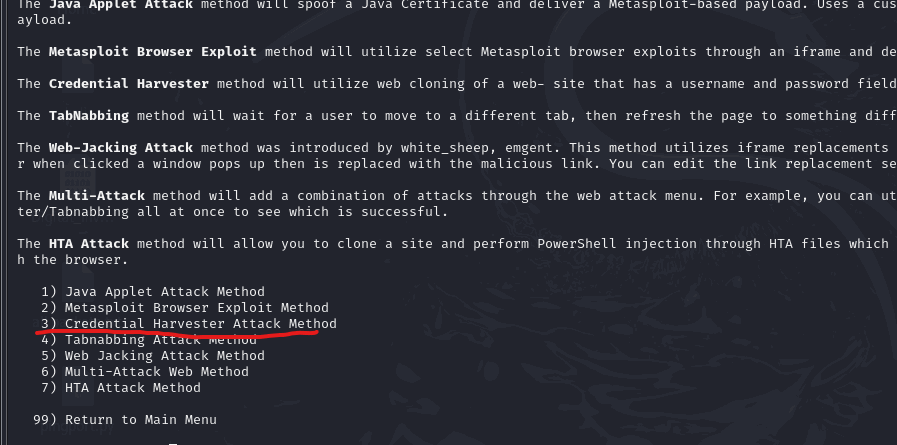
Used the Credential Harvester and Site Cloner modules to replicate a legitimate website.
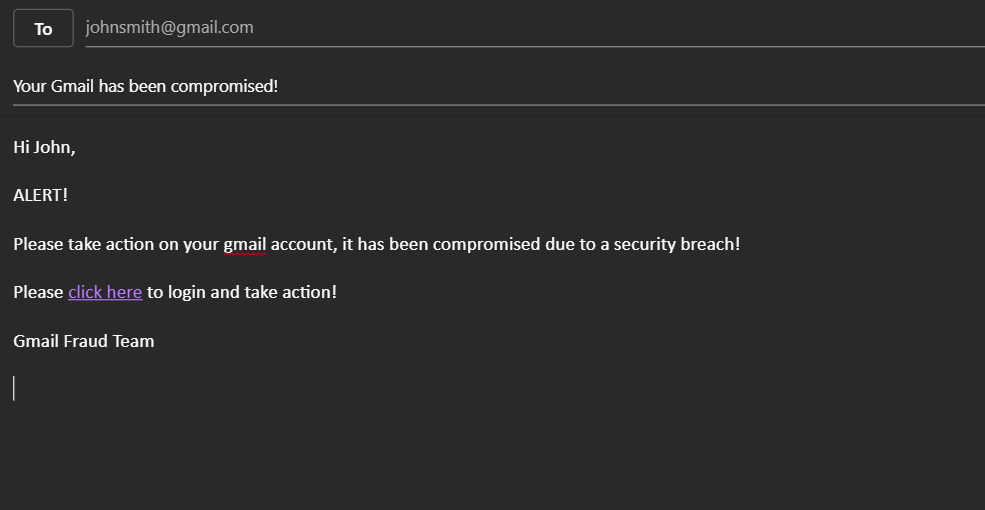
Sent the phishing link and analysed the captured data.
What I learnt: User education is the strongest defence against phishing, and understanding the attack is the first step to mitigating social engineering.
View screenshots
Secure web application assessment
RMIT Kali Linux, Metasploitable 2, Nmap, DVWA
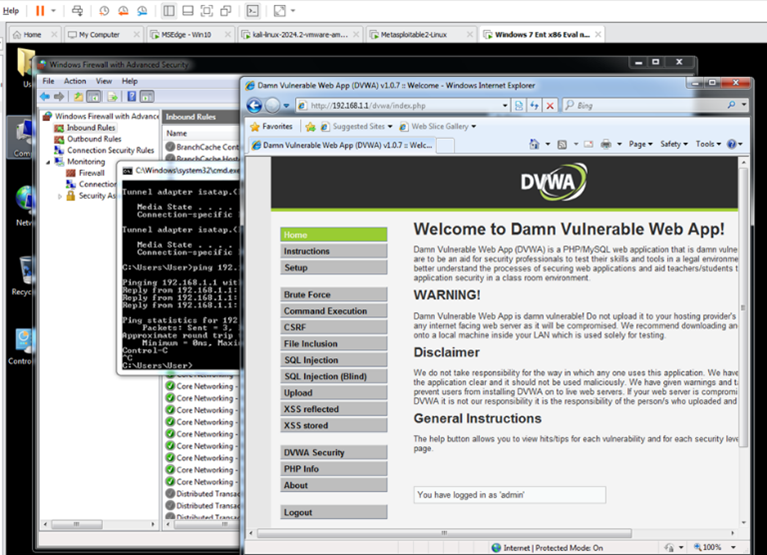
Carried out a vulnerability assessment of a deliberately vulnerable web application.
What was the challenge: Find weaknesses in a web server the way an attacker would, using only deliberately vulnerable targets in an isolated lab, then explain how to fix what I found.
What steps I took:
Built a virtual environment for ethical hacking simulations.
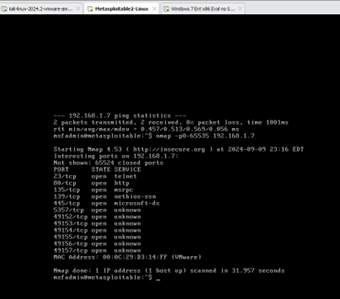
Scanned the target with Nmap to find open ports and potential vulnerabilities.
Identified port 80 (Apache) and other open services as weak points, then exploited them to gain unauthorised access.
Used DVWA (Damn Vulnerable Web Application) from Kali Linux for SQL injection and privilege escalation.
Recommended patches and fixes to secure the application.
What I learnt: Hands-on use of Nmap and DVWA showed me why web servers and applications must be hardened and patched.
View screenshots
Build your own car
RMIT Raspberry Pi, Python · Future Innovators Award 2024
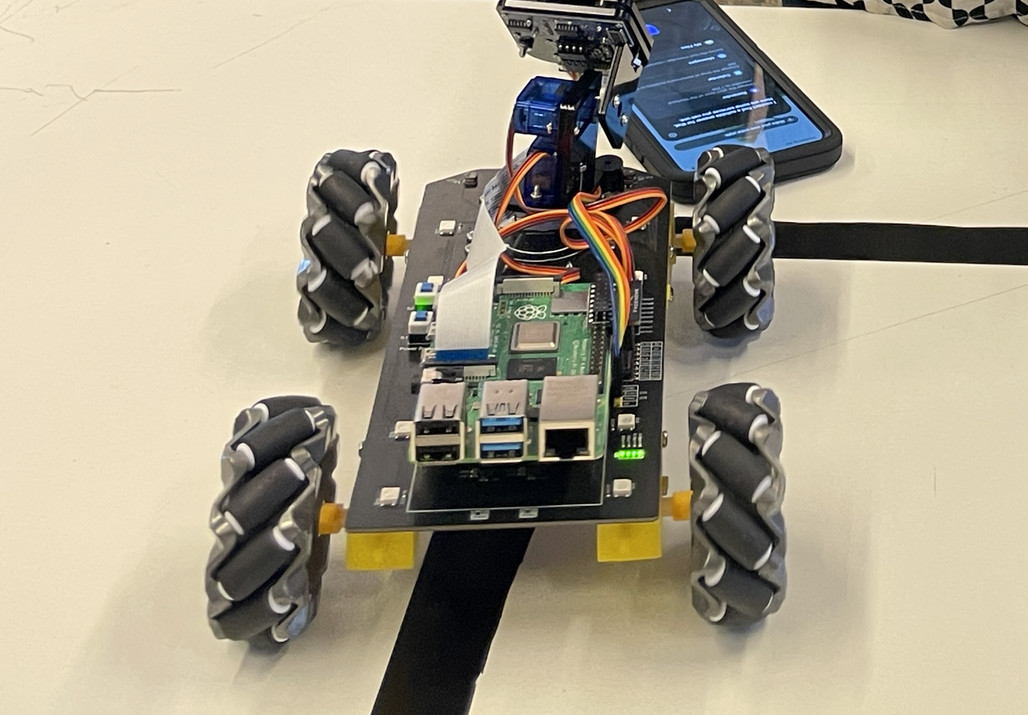
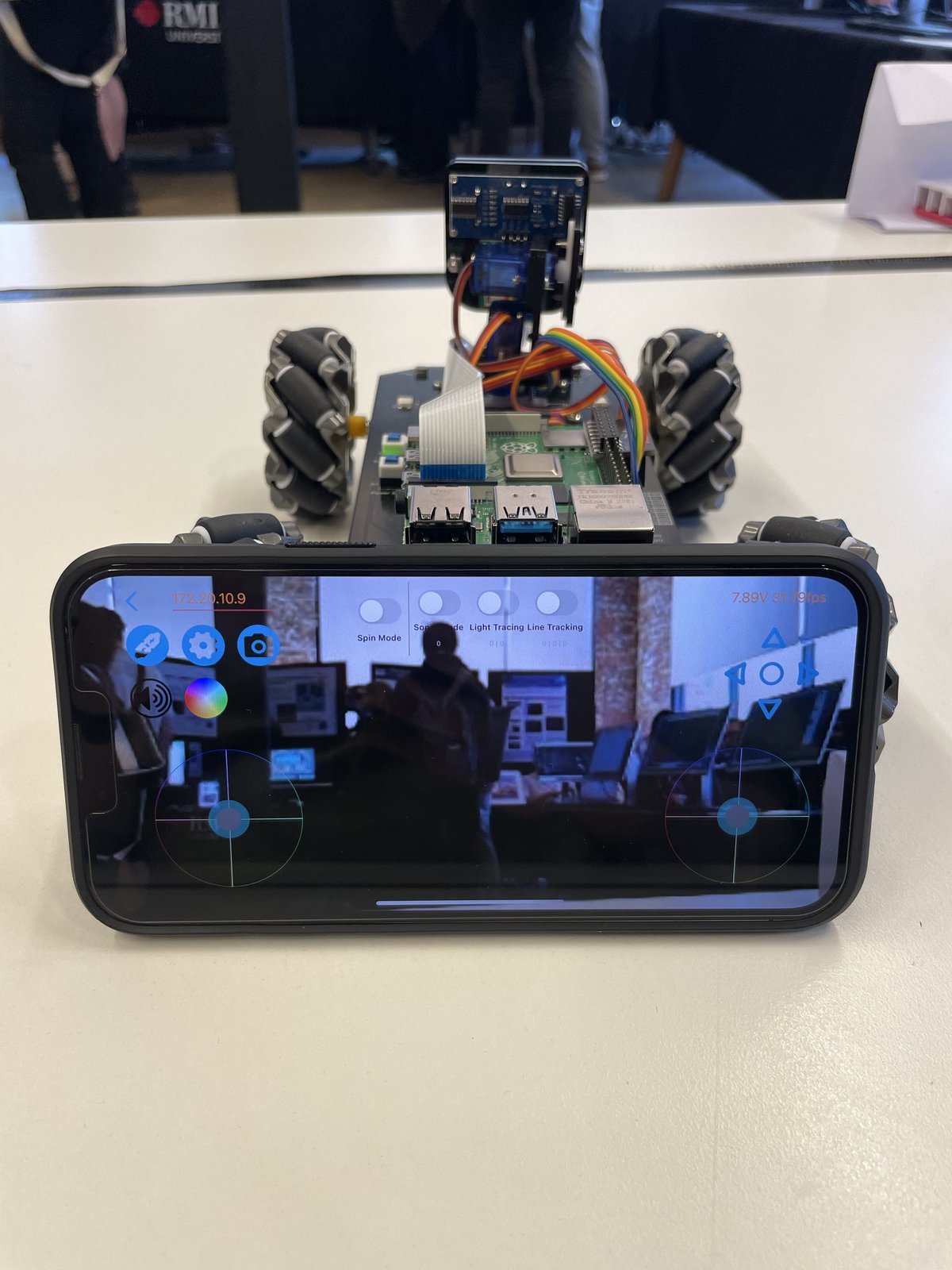
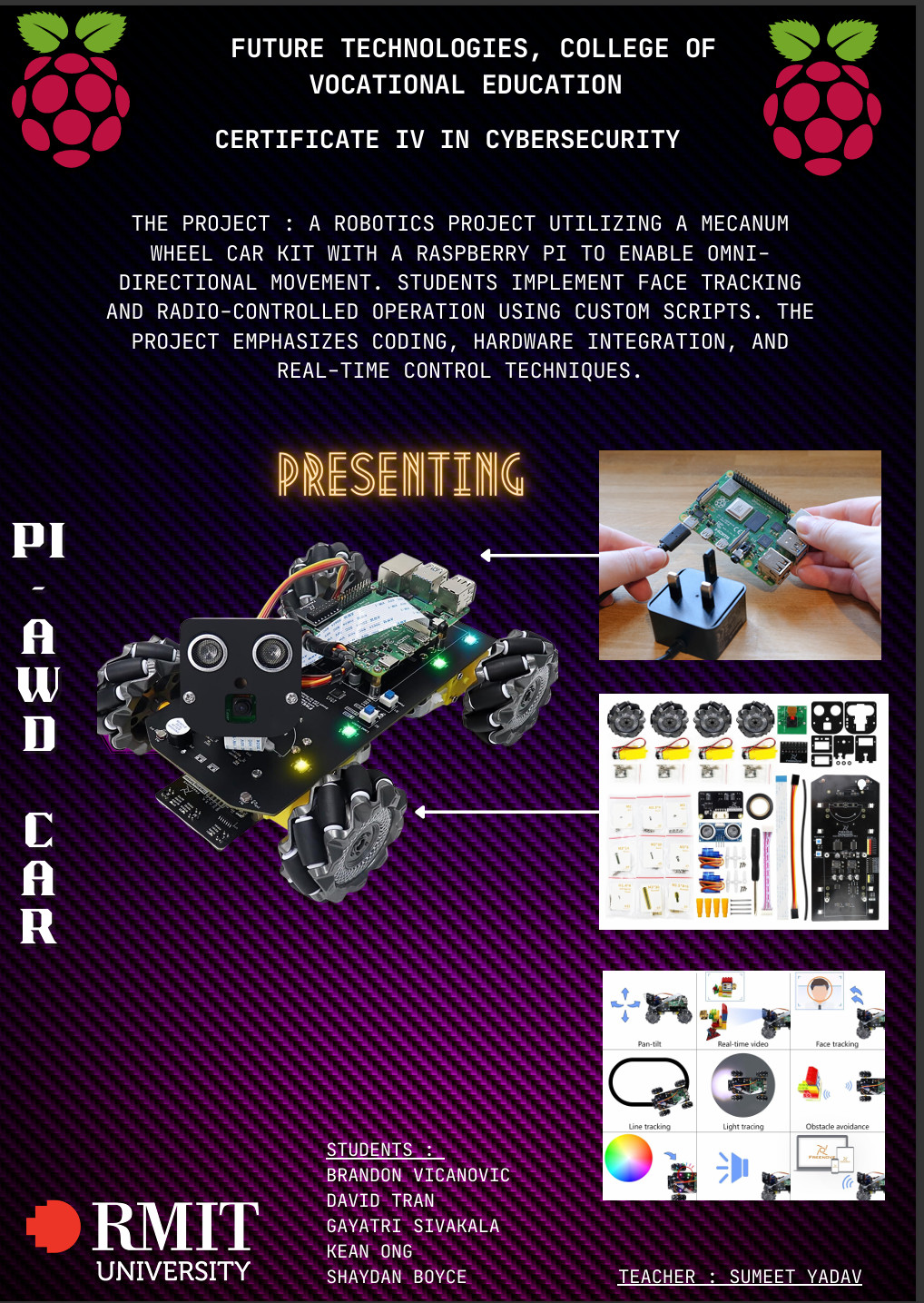
Built and programmed a face-tracking, remote-controlled car from a mecanum-wheel kit, using a Raspberry Pi and Python, as part of a team of five.
What was the challenge: Make separate parts work as one system. The motors, sensors and camera had to be controlled by Python on a Raspberry Pi so the car could track a face reliably, while working in a team of five.
What steps I took:
Wrote Python scripts to control the motors and sensors.
Integrated the hardware components so they worked together reliably.
Tested and troubleshot navigation and responsiveness.
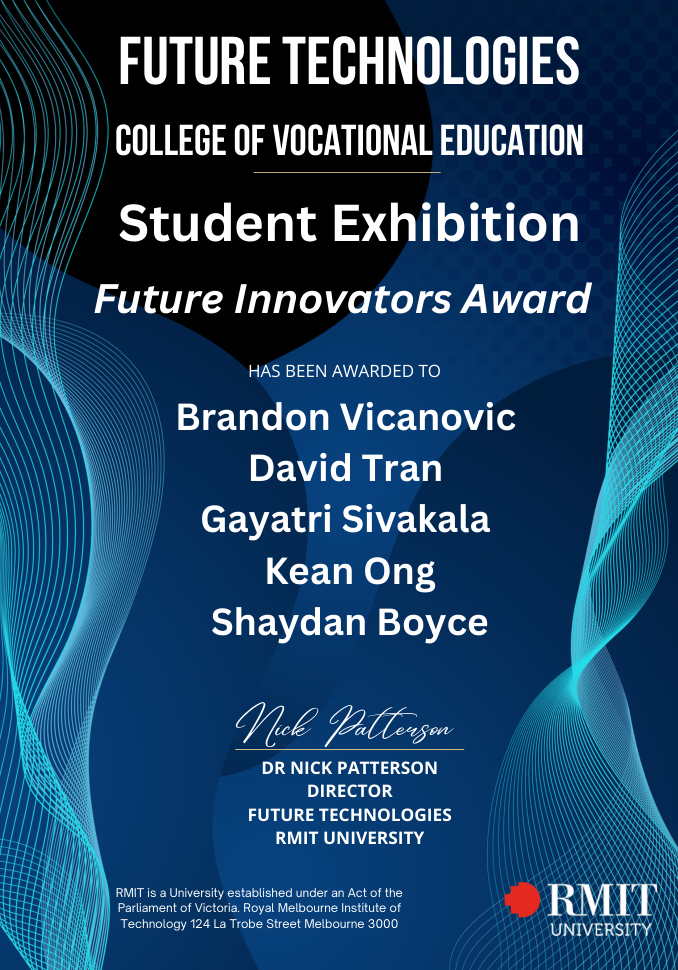
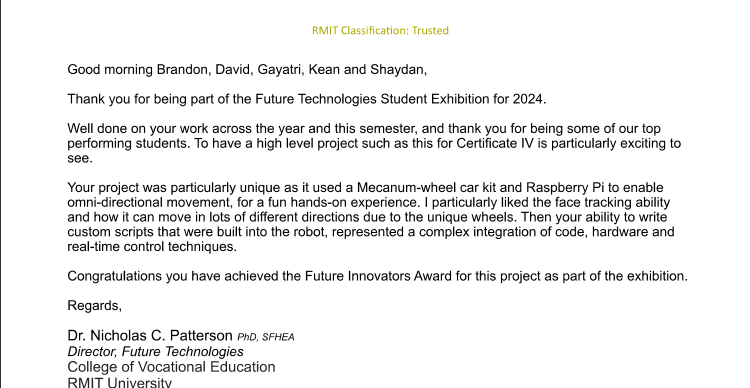
Team collaboration: Worked closely with classmates to troubleshoot hardware and software issues, resulting in our team winning the RMIT Future Innovators Award (2024) for technical problem-solving and integration.
What I learnt: I gained hands-on experience in hardware and software integration, team problem-solving and automation.
View screenshots
Official email confirming the 2024 RMIT Future Innovators Award from Director of RMIT (Dr. Nicholas C. Patterson)
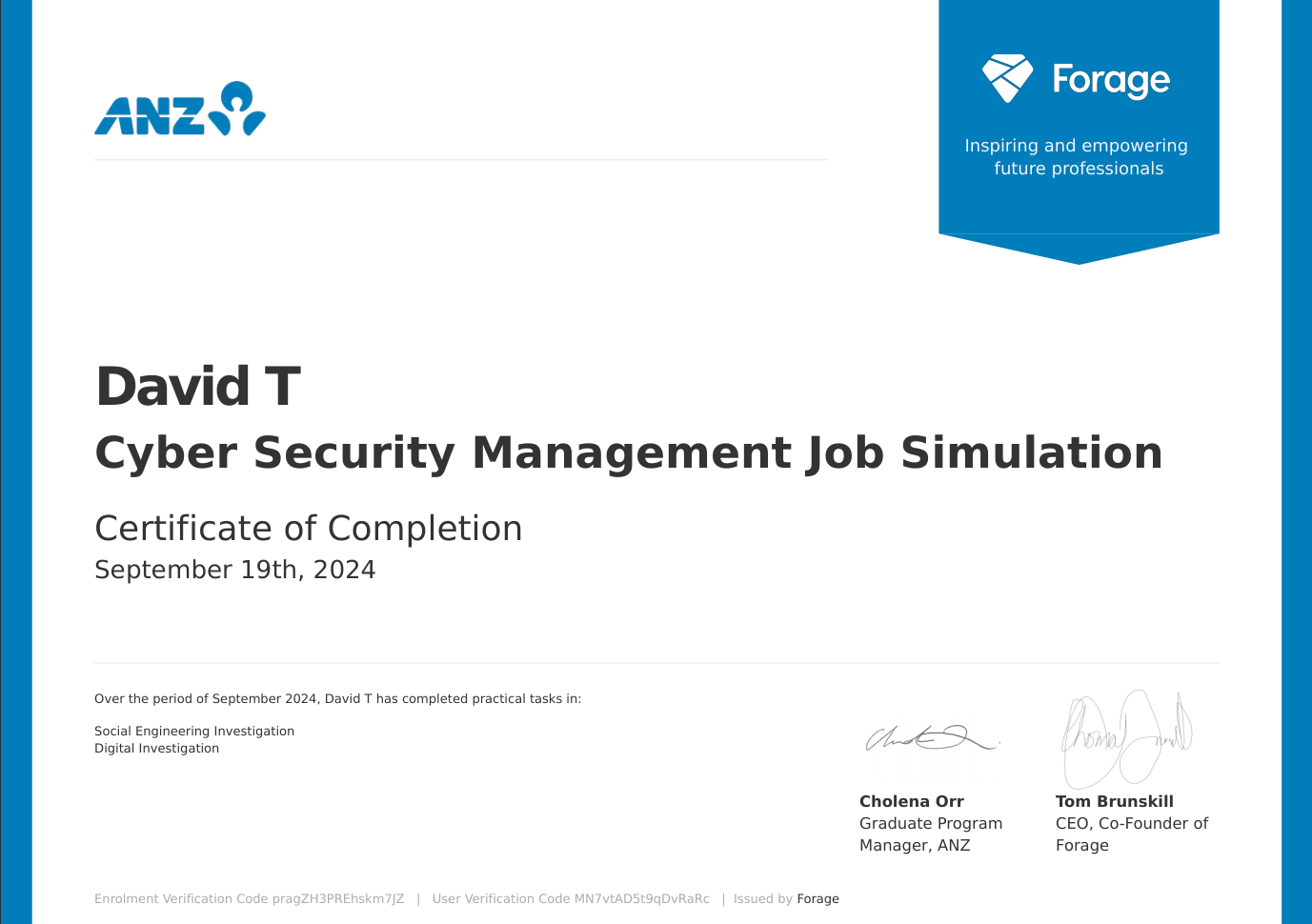
Completed a practical simulation focused on identifying Cyber Security threats at ANZ on the Forage platform.
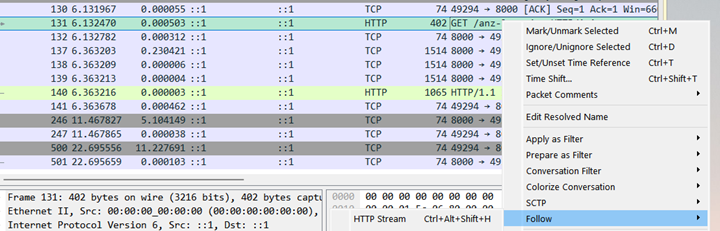
What was the challenge: Investigate suspicious emails and work out what had happened using a packet capture—finding malicious traffic among many packets and recovering files hidden in the data.
What steps I took:
Investigated suspicious emails to identify phishing indicators and report malicious items.
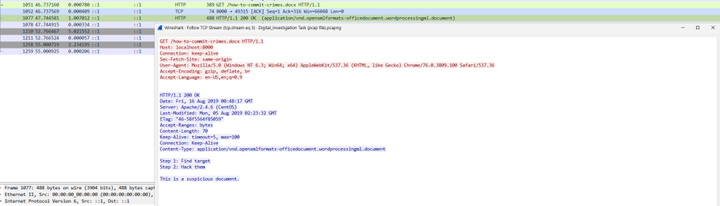
Analysed a packet capture (PCAP) file using open-source tools (Wireshark), filtering HTTP traffic and following TCP streams to identify and investigate potential threats.
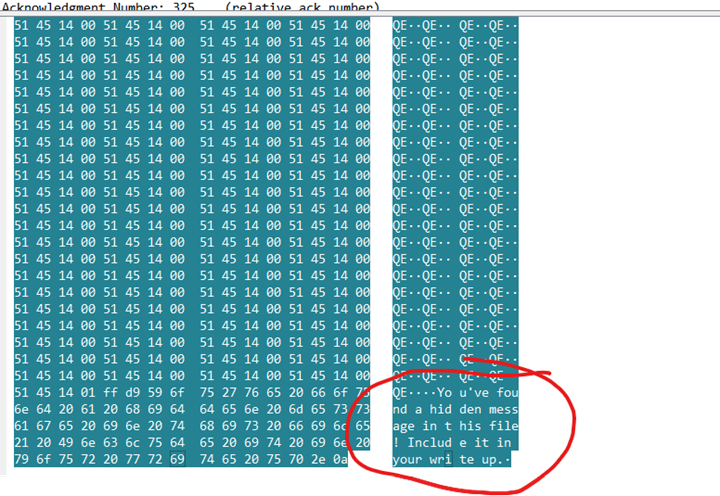
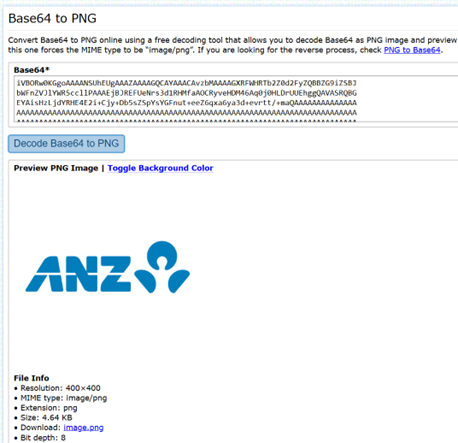
Used HxD (hex editor) to rebuild raw data into images, including anz-logo.jpg and bank-card.jpg.
Decoded Base64 data with online tools to recover hidden images.
What I learnt: I gained practical experience in email triage, threat identification, packet analysis and data decoding.
View screenshots and certificate
Azure-hosted web portfolio
Personal HTML, CSS, Azure Static Web Apps, GitHub
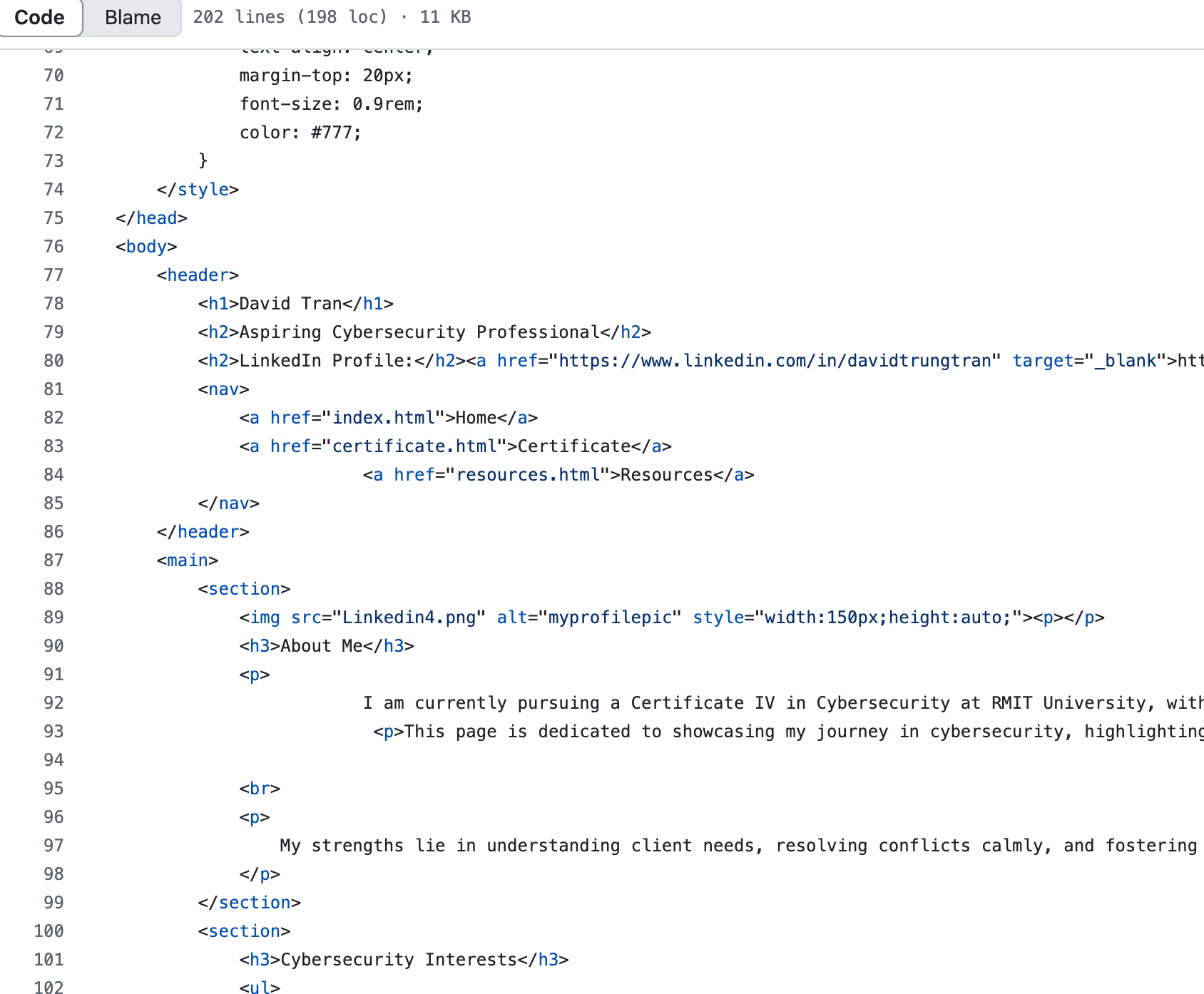
Taught myself HTML and CSS to build this website, and hosted it on Azure's free tier to showcase my cybersecurity journey.
What was the challenge: Teach myself enough HTML and CSS to build a clear portfolio, and get it online using Azure's free tier without paying for hosting.
What steps I took:
Learnt the basics of HTML and CSS through online training and Udemy short courses.
Wrote the pages and stylesheet and stored the code in GitHub.
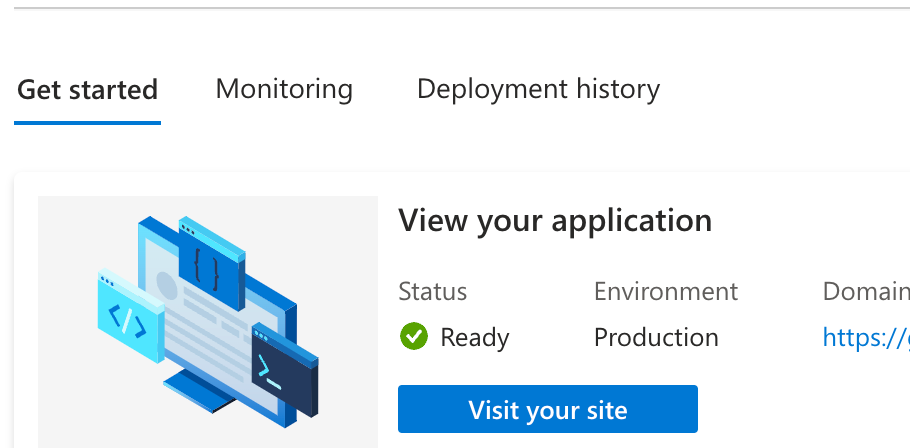
Deployed the site with Azure Static Web Apps on the free tier.
What I learnt: I gained a better understanding of cloud hosting and Azure free-tier services, practical HTML and CSS experience, and stronger problem-solving in the cloud.
View screenshots
2024 – Azure Data Fundamentals (DP-900)
Azure Data Fundamentals Certification (DP-900): Demonstrated my proficiency in foundational data concepts and Microsoft Azure's data services. This certification highlights my ability to work with relational and non-relational data, explore modern data processing techniques, and understand the role of cloud-based data services in business environments.
Understanding of core data principles, such as relational, non-relational, and big data processing.
Familiarity with Azure data services, including Azure SQL, Cosmos DB, and Synapse Analytics.
Ability to articulate data analytics and database concepts to support cloud-based solutions.